Traditional Indian Pose Ideas for Festivals & Weddings
Published on May 09, 2026
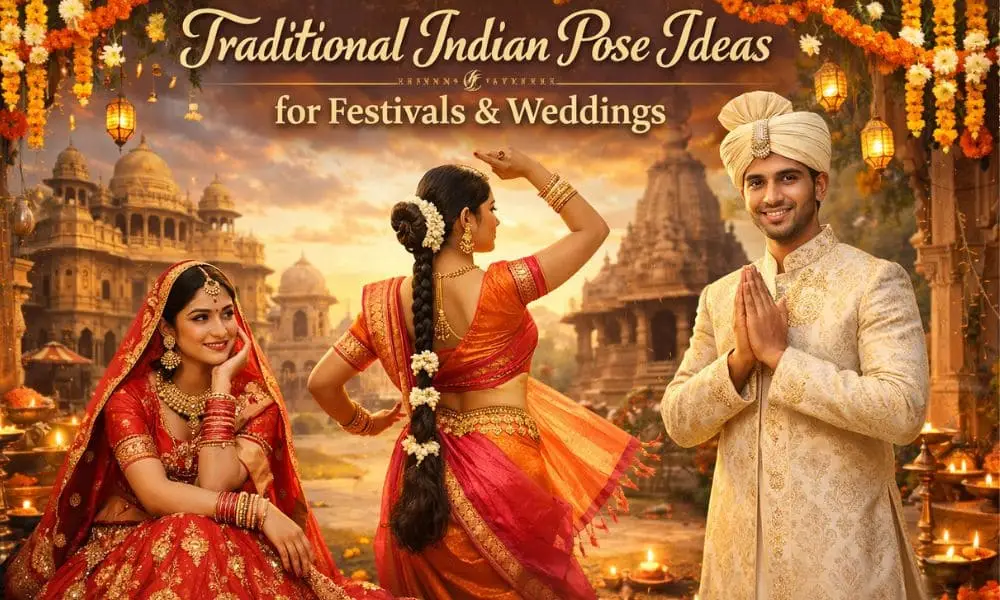
Every year, millions of people across India dress up in their most beautiful traditional outfits for weddings, Diwali, Holi, Navratri, Eid, and countless other occasions. The lehengas are gorgeous. The sherwanis are sharp. The jewelry is stunning. The makeup is flawless.
And then they stand in front of the camera and freeze.
🚀 Scale Your Business to New Heights!
Get your own premium website built at the best price. Supercharge your online presence and 10x your growth with our Expert Digital Marketing and AI Website Development services.
Build Your Website - Click Here✉️ info@rankrocketlodi.com | 🌐 RankRocketLodi.com
Nobody told them how to stand. Nobody explained what to do with their hands. Nobody showed them how to hold their dupatta or which angle works best for a saree. So they stand straight, smile stiffly, and take a photo that does zero justice to how incredible they actually look.
This guide is here to fix that.
Whether you are the bride, the groom, a wedding guest, a family member, or someone celebrating a festival in their best traditional outfit, these pose ideas will help you take photos that actually feel beautiful. Not just technically correct, but genuinely emotional and visually stunning in a way that reflects the richness of Indian culture.
You do not need a professional photographer. You do not need expensive equipment. You just need to understand a few simple principles and practice them a little before the big moment arrives.
Let us get into it.
Why Traditional Indian Poses Are Different From Regular Poses
If you have ever tried copying a Western fashion pose while wearing a saree or lehenga, you already know something felt off. That is because traditional Indian outfits are designed with specific visual logic. A lehenga is meant to flare. A saree pallu is meant to drape with intention. A sherwani has structure that works better from certain angles.
Western poses tend to work with fitted, form-following clothing. Indian traditional wear is often more layered, more embellished, and more dramatic. The posing needs to match.
Beyond the outfits, Indian festivals and weddings carry emotional storytelling that great photos should capture. A bride looking down at her mehendi. A grandmother watching from the corner with pride. Sisters laughing before the baraat arrives. These moments are not just pretty, they are meaningful. And the best traditional poses work with that meaning rather than ignoring it.
When you understand this difference, posing stops feeling awkward and starts feeling natural.
The Four Elements of Any Great Traditional Indian Photo
Before jumping into specific ideas, here are four foundational things that separate a great traditional photo from a forgettable one.
Hands
In Indian traditional wear, your hands are almost always visible. You have mehendi on them. You are wearing bangles, rings, or haath phool. Your dupatta runs through your fingers. Your hands carry so much visual detail that letting them hang awkwardly is one of the biggest posing mistakes people make. Always give your hands something intentional to do.
Eyes and Expression
Your face tells the story. Looking directly at the camera creates confidence and connection. Looking slightly off to the side creates thoughtfulness and depth. Looking down at your outfit or mehendi creates intimacy. None of these is wrong, they just create different feelings. Choose the one that matches the mood you want the photo to carry.
Your Outfit's Best Features
Every traditional outfit has a hero element. For a lehenga, it might be the skirt's embroidery. For a saree, it could be the blouse design or the pallu work. For a sherwani, the front detailing or the back. Good posing puts that hero element in the frame in its best possible way.
Natural Relaxation
This is the one most people miss. Stiffness ruins even the most technically perfect pose. The secret to looking relaxed in photos is to move just before the shutter clicks. Take a breath, shift your weight slightly, let your shoulders drop, and then settle. Your body naturally finds a more relaxed position this way.
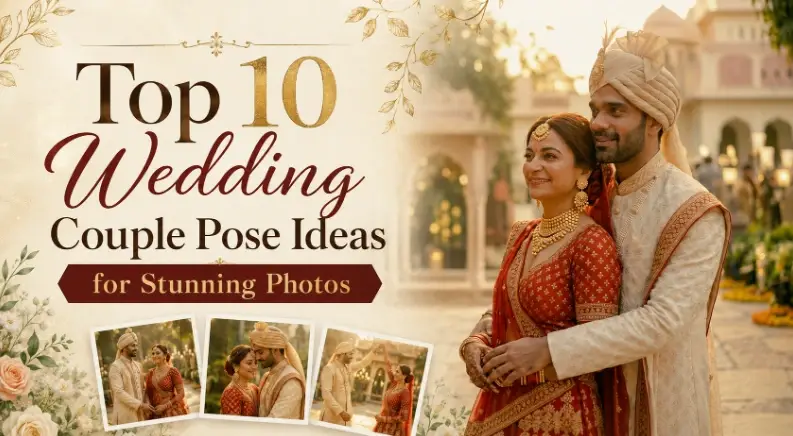
Traditional Indian Pose Ideas for Weddings
Bridal Poses That Actually Capture Emotion
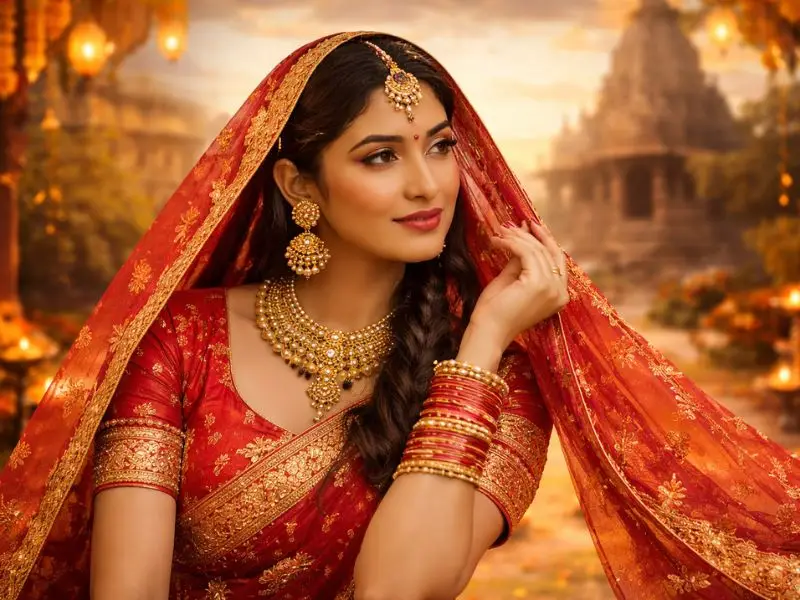
The Dupatta Hold and Glance Away
Hold one corner of your dupatta up near your cheek or just past your ear, as if the breeze is catching it. Let your eyes look gently to the side or slightly downward. This creates a soft, mysterious quality that works beautifully with heavy bridal jewelry and makeup. It also naturally frames your face without you having to do anything complicated.
The Seated Spread
Sit on the mandap steps, a decorative chair, or a low seat at your venue. Let your lehenga or saree spread around you naturally. Place your hands gently in your lap, one over the other. Look down softly or share a quiet smile. This pose is timeless because it is grounded and serene, qualities that feel deeply appropriate for a wedding day.
The Mehendi Close-Up
Bring both hands together with palms facing upward, or lay one hand gently on the other and position them in the frame with your face softly visible in the background. Let the mehendi take the lead in this photo. Look down at your hands with a small, private smile. This is one of the most emotionally resonant wedding photos you can take because it connects your expression to one of the most meaningful symbols of the occasion.
For more detailed guidance on saree-specific poses and selfie angles that work beautifully at weddings, the guide on perfect saree selfies and pose ideas covers everything from the right angle to how to hold your pallu for the most flattering look.
The Profile Stand
Stand at roughly a 45-degree angle to the camera. Let your lehenga or saree drape fall completely visible. Look to the far side, not at the camera. This profile or three-quarter stance shows off the full length of your outfit and creates a very editorial, almost film-still quality to the photo. Works especially well outdoors during golden hour light.
The Candid Laugh
This is not really a pose in the traditional sense. Ask someone near you to say something funny just before the photo is taken, or simply remember something that genuinely makes you smile. The resulting expression is impossible to fake and becomes one of the most treasured images from any wedding album.
Groom and Men's Traditional Poses
Men in traditional wear often feel more uncertain about posing than women, partly because there is less guidance available. Here are poses that feel natural and strong.
The Relaxed Crossed Arms
Stand straight with arms loosely crossed at the chest, not tightly gripped, just resting. Turn slightly to a 45-degree angle from the camera. Keep your chin level and look just slightly past the lens with a calm, confident expression. This is clean, masculine, and works in any traditional setting.
The One Hand in Pocket Lean
If your sherwani or kurta has pockets or you are wearing churidar that allows it, one hand in the pocket with the other relaxed at your side instantly creates a casual confidence. Lean slightly against a wall, pillar, or architectural element at the venue. This is especially effective for pre-wedding shoots.
The Candid Adjustment Shot
Ask your photographer to capture you adjusting your sehra, buttoning your sherwani, or sharing a handshake with your father. These small, real moments create photos that feel human and warm rather than stiff and formal. The best wedding photography always balances posed and candid.
For everyday pose inspiration that also translates into traditional settings, the guide on top selfie poses for boys at home has practical ideas worth trying before your big occasion.
Group and Family Wedding Poses
The Step Arrangement with Individual Poses
For family group photos, use natural height variation. Put shorter family members in front, taller ones behind. But here is the important part: do not have everyone do the same thing. One person holds their dupatta. Another rests a hand on their waist. Someone laughs naturally. The variety within the coordinated outfits is what makes the photo interesting instead of stiff.
The Bridesmaid Circle
Have the bridal party stand in a loose circle facing inward, then photograph from slightly above. Everyone's coordinated outfits create a visually stunning pattern when seen from above. This works especially well with bright, contrasting color combinations that are common in Indian weddings.
The Walking Together Shot
Have the family or bridal party walk together naturally, either toward the camera or away from it. Nobody is posing. Everyone is just moving and talking. The result looks cinematic and authentic at the same time. This is a modern technique that blends incredibly well with traditional Indian outfits and settings.
Traditional Indian Pose Ideas for Festivals
Holi Poses That Capture the Joy
Holi is about movement, color, and pure happiness. Static poses rarely work here.
The Color Throw
Hold a handful of gulal and throw it upward just before the photo is taken. Let the cloud of color surround you. Wear white or a very light pastel so the colors pop dramatically. Your expression should be full joy, mouth slightly open, eyes bright, completely in the moment.
The Mid-Laugh Candid
Do not try to pose for Holi photos. Instead, ask a friend to keep the camera ready while you are actually playing. The best Holi photos come from genuine moments of surprise, laughter, and movement. Staged Holi photos almost always look less alive than the real thing.
For creative Holi photo inspiration with specific pose breakdowns and color tips, the guide on Holi selfie poses and colorful photo ideas is worth reading before the festival.
Navratri and Garba Poses
The Mid-Spin Shot
During Garba, the most spectacular photo opportunity is mid-spin. The chaniya choli fans outward and creates a circular, almost magical silhouette. Ask your friend or photographer to use burst mode to catch this. The motion of the skirt combined with a focused face creates photos that look almost like artwork.
The Dandiya Cross Pose
Hold your dandiya sticks crossed in front of you at chest height and look confidently at the camera. This works beautifully as a posed portrait between dance rounds. It is simple, it is traditional, and it immediately communicates the festive energy.
Diwali Poses
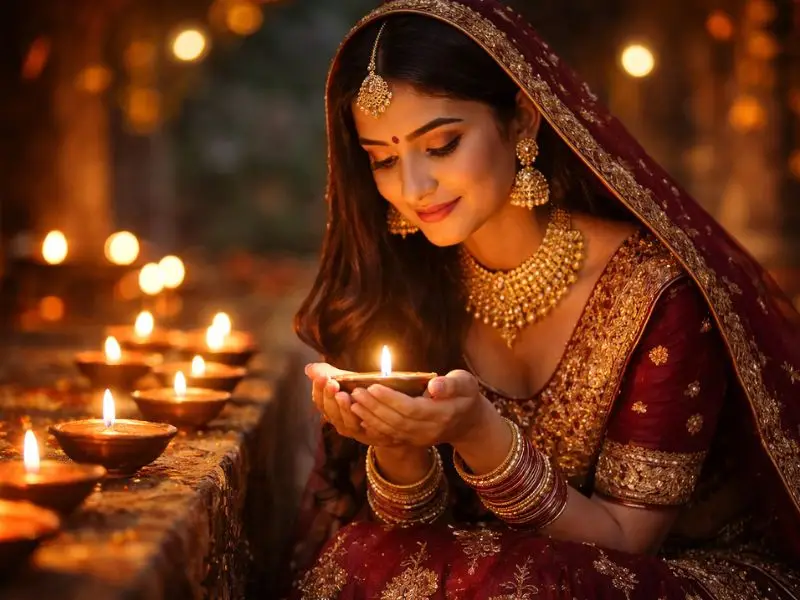
The Diya Cupping Pose
Sit or kneel near a row of lit diyas. Cup your hands around one flame gently without touching it. Let the warm glow from the diya light your face naturally from below. Wear deep jewel tones, burgundy, navy, forest green, emerald, because these absorb and reflect the golden light beautifully. Look down at the flame with a soft, peaceful expression.
The Rangoli Frame Pose
If your home or venue has a large rangoli, stand or sit at its edge so the colorful design frames you from below. Photograph from slightly above to capture both you and the rangoli together. This works especially well with traditional silk sarees or embroidered suits.
Eid Poses
The Dupatta Toss
Stand in front of a simple, beautiful background. Toss your dupatta lightly so it floats and catches around your shoulders as the photo is taken. Close your eyes gently or tilt your face slightly upward. This is a movement-based pose that creates a flowing, graceful image that works perfectly for Eid outfits.
The Hands Together Prayer Pose
Hold your hands together at chest height as if in prayer or gratitude. Look down gently or close your eyes. This pose carries deep cultural and spiritual resonance that is appropriate for Eid and feels very natural in traditional wear.
How to Actually Use These Poses Without Feeling Awkward
Practice the Night Before
This sounds simple but very few people do it. Spend ten minutes before your event trying a few of these poses in your actual outfit in front of a full-length mirror. See which angles feel comfortable. Notice where your hands look best. By the time the actual photos are being taken, you will feel genuinely more relaxed because the poses will not be unfamiliar.
Use the Light in Your Favor
Morning light and late afternoon golden hour light are the most flattering for traditional Indian outfits. The warm tone complements embroidery, deep colors, and skin tones in a way that harsh midday sun simply cannot. Whenever possible, plan your main photo moments around these windows of natural light.
Talk to Your Photographer or Friend
If you want specific shots, say so. Share this article with them. Tell them you want a dupatta toss, a mehendi close-up, or a mid-spin Garba shot. Photographers welcome clear direction and it results in better images for everyone.
Do Not Over-Pose the Entire Event
The biggest mistake people make is trying to pose every single moment. This is exhausting and it shows in the photos. Have your few intentional posed shots and then simply live the event. The candid photos taken when you forget the camera is there are often the most emotionally powerful images of the day.
FAQ: Quick Answers for Common Posing Questions
What is the most flattering pose for a saree at a wedding?
Standing at a slight angle with one hand gently holding the pallu and looking to the side consistently creates the most flattering saree silhouette. It shows the drape, highlights your waist, and avoids the stiffness of facing the camera directly.
How do I avoid looking stiff in traditional photos?
Move just before the photo is taken. Take a breath, shift your weight, relax your shoulders, and then settle naturally into the pose. Stiffness comes from holding a position too long before the shutter clicks.
What group pose works best for Indian weddings?
Offset height arrangements with individual small variations within each person work better than straight lines with identical poses. Let people be slightly themselves within the coordinated frame.
Which Holi pose actually captures the festival energy?
Motion-based poses always outperform static ones for Holi. The color throw, the mid-laugh, the surprised expression, these feel alive in a way that standing still with color on your face simply does not.
Should men smile in traditional photos?
A natural, relaxed expression often looks stronger than a forced smile. A genuine small smile is always good. What to avoid is the forced wide grin that does not match the mood of the outfit or occasion.
A Note About Selfie Competition
If you love capturing traditional looks and want to share them in a space built for it, Selfie Competition is a growing platform for photography lovers across India where people showcase their best moments in traditional and festive wear. It is a wonderful community to find inspiration, share your own looks, and connect with people who appreciate the art of a well-captured Indian photo moment.
Final Thoughts: Pose with Intention, Capture Something Real
Indian festivals and weddings are among the most visually stunning occasions anywhere in the world. The colors, the fabrics, the traditions, the emotions, all of it deserves photos that do justice to how beautiful these moments actually are.
You do not need to be a model. You do not need years of practice. You just need a few intentional ideas, a little preparation, and the confidence to try something beyond standing straight and smiling stiffly.
Use your hands with purpose. Work with your outfit rather than ignoring it. Let your expression match what you are actually feeling in the moment. Use your surroundings as part of the story. And leave room for the unplanned moments because they will often become your favorites.
Save this guide before your next festival or wedding, try two or three poses that feel natural to you, and watch how different your photos look and feel compared to before.
If you found this helpful, share it with a friend who has a wedding or festival coming up. And explore more traditional and festive pose guides for every occasion right here.
Written by Sandeep
Passionate digital content creator and photography enthusiast. Discover more guides on framing, lighting, and perfect poses on our blog.
Read my full story →