20 Beach Photoshoot Poses That Make Your Vacation Pictures Look Cinematic
Published on May 09, 2026
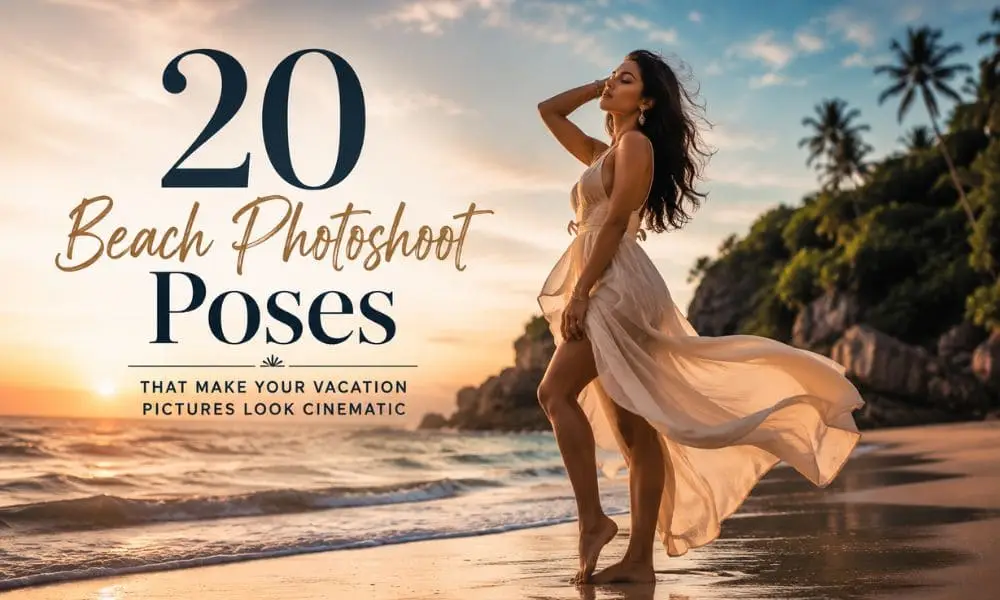
There is something about the beach that makes everyone want to take photos.
The golden light, the waves crashing behind you, the sand between your toes it all feels like a movie. But if you have ever come back from a beach vacation and looked at your pictures and thought "why don't these look the way I imagined," you are not alone.
Most people at the beach take the same three photos. Standing straight, squinting a little, holding up a peace sign. And those photos are fine. But they are never the ones that stop people mid-scroll on Instagram or make your friends say "wait, who took this?"
🚀 Scale Your Business to New Heights!
Get your own premium website built at the best price. Supercharge your online presence and 10x your growth with our Expert Digital Marketing and AI Website Development services.
Build Your Website - Click Here✉️ info@rankrocketlodi.com | 🌐 RankRocketLodi.com
The difference between a regular beach photo and a cinematic beach photo is not the camera, and it is not always the location. It is the pose, the intention, and understanding how your body relates to the light, the waves, and the space around you.
This guide is going to walk you through 20 beach photoshoot poses that actually work in real life not just on professional models in editorial shoots. Whether you are solo, with a partner, with friends, or with your family, these poses are designed for real people who want real results.
And here is the thing you do not need a professional photographer. Your friend with an iPhone and good timing is enough. You just need to know what to do with your body.
Why Most Beach Photos Feel Flat (And How Posing Changes Everything)
Before we get into the poses, it helps to understand why some photos feel alive and others feel dead, even when the beach looks identical in both.
Flat photos usually happen because of three things:
First, the subject is too far from anything interesting, too much empty sand, no relationship to the waves or the horizon. Second, the body language is closed off crossed arms, rigid spine, weight distributed evenly on both feet. Third, there is no visual story happening. The viewer looks at the photo and sees a person standing at a beach, and that is it.
Cinematic photos fix all three of these. The subject interacts with the environment. The body is open, dynamic, or intentionally soft. And there is something happening: movement, emotion, light playing off the skin, a moment being captured rather than manufactured.
Posing is not about being fake. It is about being intentionally natural. It is the difference between knowing how to sit comfortably in a chair versus collapsing into it awkwardly.
Now, let us get into the actual poses.
The 20 Poses: Broken Down Simply
Each pose below includes what to do, how to set it up, and what makes it work visually. You will also find small notes on how to adapt each pose for selfie-style shooting, which is perfect if you are a girl or guy doing solo beach photography.
1. The Walking Away Shot
How to do it: Walk slowly away from the camera, toward the water or the horizon. Do not look back. Let your arms swing naturally. The photographer shoots from behind at a slight downward angle.
Why it works: This creates instant depth and narrative. The viewer feels like they are watching someone walk into their story. The waves in the background frame the subject without competing.
Try it this way: Wear something that moves, a flowy dress, a loose linen shirt, shorts with some flare. Movement in fabric adds to the cinematic feel. Walk barefoot in the wet sand so your footprints trail behind you.
If you love this type of casual, confident solo energy, check out our guide on easy selfie poses for girls beginner's guide where similar principles of natural movement are broken down step by step.
2. Sitting With Knees Pulled Up, Looking at the Water
How to do it: Sit on the sand, knees pulled up toward your chest, arms loosely around your shins. Turn your face fully toward the water or the horizon. The photographer shoots from your side or slightly behind.
Why it works: This is one of the most naturally cinematic poses because it looks completely unposed. It communicates thoughtfulness and peace. The gaze toward the horizon creates emotional depth.
Try it this way: Do this during golden hour when the light hits the side of your face. A slight tilt of the chin downward keeps the jaw defined and the expression soft.
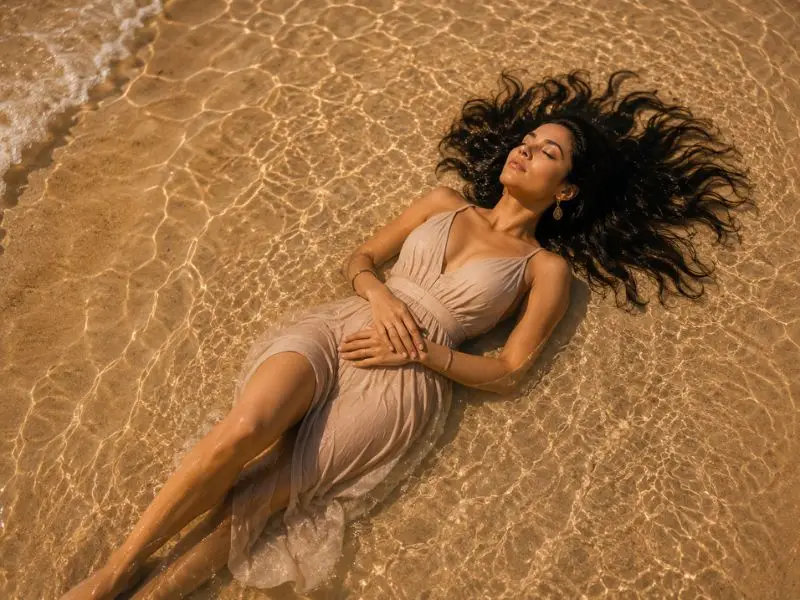
3. Lying in the Shallow Water on Your Back
How to do it: Find where the waves are very thin and shallow just an inch or two of water. Lie back with your hair fanning out around you. Arms loose by your sides or crossed lightly on your stomach. Look up at the sky.
Why it works: The water acts as a mirror and creates a halo of reflected light around the subject. It is dramatic without trying to be. The overhead angle makes the body look elongated and the face looks peaceful.
Try it this way: This works best when the sky is bright blue or golden. Have your photographer stand directly above you. The wet sand around you becomes a natural, gorgeous frame.
4. Leaning Against Rocks or a Pier Pillar
How to do it: Find a rock, pier pillar, or any natural vertical surface. Lean your back against it, one foot flat on the surface behind you. Look off to the side or downward. One hand in your pocket or loosely at your side.
Why it works: This is the classic editorial posture it gives the body a clean, diagonal line while the natural texture behind you adds depth. It looks like a magazine cover because magazine photographers have used this structure for decades.
Try it this way: Do not look directly at the camera. Looking to the side or slightly down at the sand gives a much more natural, story-driven result. Boys especially can pull this off effortlessly. If you want to master this kind of confident male posing, our best selfie poses for boys guide has a lot of complementary ideas.
5. Running Into the Waves
How to do it: Walk into the water and then at a signal, run or jump as a small wave comes toward you. The photographer uses burst mode to capture the movement, the splash, and the expression.
Why it works: Action shots carry inherent energy. You cannot fake the joy of getting hit by a wave. The motion blur on the water, the caught laugh, the wet clothes everything about this photo feels alive and real.
Try it this way: Do not wait until you are in serious water. The shallow wave-edge where the water rushes in is enough. The splash around your ankles and the wet sand reflecting the sky is often more visually interesting than deep water.
6. Looking Back Over Your Shoulder
How to do it: Stand with your body angled away from the camera. Turn your head slowly back toward the lens, keeping your chin slightly down. Eyes look directly into the camera.
Why it works: This pose creates tension. There is a split-second pause that the camera catches the subject is leaving, but also looking back. It is inherently dramatic without being forced. Models call this the "broken wrist look" because the same shoulder-drop principle applies.
Try it this way: The chin-down detail is crucial. Chin up creates a harsh, unflattering angle for most people. Chin slightly down, eyes lifted, creates intensity and softness at the same time.
7. Candid Laughing Moment
How to do it: Have your photographer ready. Then do something that makes you genuinely laugh tell a stupid joke, think of something funny, or just laugh at the absurdity of posing at a beach. The photographer shoots continuously.
Why it works: Genuine laughter is impossible to replicate artificially in a photo. It changes the entire face the eyes crinkle, the jaw relaxes, the whole body opens up. These are almost always the most shared photos from any trip.
Try it this way: Do this toward the end of your shoot when you are relaxed and comfortable. Earlier shots are for composed poses. The candid magic usually happens when you forget the camera exists.
8. The Twirl in a Dress
How to do it: Wear something with movement a sundress, a sarong, a flowy skirt. Stand with space around you. Spin once, slowly or quickly, while the photographer shoots on burst mode.
Why it works: The fabric creates a natural circle of movement that fills the frame beautifully. The centrifugal effect on a dress creates shape and volume that otherwise does not exist. The subject looks free, joyful, and unbothered.
Try it this way: Do it at the shoreline with the ocean behind you. The combination of water, golden light, and flowing fabric is a composition that rarely fails. This is one of the most loved poses in our best selfie poses for girls collection and translates brilliantly to full beach photoshoots.
9. Half-Submerged, Emerging from the Water
How to do it: Go into the water until it reaches your waist. Then slowly emerge, walking toward the shore, wet and dripping. Look straight at the camera or off to the side.
Why it works: Water adds drama. A wet subject dripping with ocean water looks elemental like something from a film. The light on wet skin, the texture of soaked fabric, the hair slicked back all of it creates a powerful visual.
Try it this way: Do this during the softer light hours, not midday harsh sun. Golden hour water lights are especially stunning. Have your photographer low to the ground so the horizon frames your upper body.
10. Sitting on a Rock With Feet Dangling
How to do it: Find a rock or ledge near the water. Sit on the edge with your feet hanging down. Lean forward slightly with your forearms on your knees. Look at the water below you or into the distance.
Why it works: The height gives a different visual perspective that is not common. The hanging feet add a childlike, carefree quality. The forward lean keeps the posture from going stiff.
Try it this way: If you cannot find a natural rock, a pier edge works. Even a wooden dock or a low cliff. The key is the feet dangling it communicates freedom.
11. Lying on Your Stomach on the Sand
How to do it: Lie flat on your stomach, chin resting on your hands or propped up with both palms under your chin. Elbows down in the sand. Look directly at the camera. Legs slightly bent up behind you.
Why it works: The low angle makes the ocean fill the entire background. It compresses the distance between you and the water visually, making the horizon feel close and dramatic. It also flattens the stomach and elongates the body.
Try it this way: Crossed feet in the air behind you adds a playful detail. This is one of those poses that looks effortless but is actually very intentional. Angle your face at 45 degrees to the camera rather than straight-on for the most flattering result.
12. Holding a Hat Against the Wind
How to do it: Wear a wide-brim sun hat. Let the wind catch it. Reach up with one hand to hold it on your head while the other arm swings free. Look slightly down or to the side.
Why it works: The gesture of holding a hat is universally understood as "beach" and "summer." But beyond the cliche, the raised arm creates a diagonal line across the frame, the hat adds scale and fashion interest, and the wind adds movement to everything including your hair and clothes.
Try it this way: Position yourself so the wind blows toward the camera this keeps your hair from covering your face. The sea breeze is your natural prop. Work with it.
13. Couple Walking Hand in Hand (Silhouette at Sunset)
How to do it: For couples, walk hand in hand along the shoreline during sunset. Position yourselves between the camera and the setting sun. The photographer shoots into the light so you become silhouettes.
Why it works: Silhouette photography removes all distraction and leaves only shape, connection, and light. Two people walking hand in hand against a burning sunset is one of the most emotionally powerful images you can take at a beach. No faces needed the shapes tell the story.
Try it this way: The timing is everything. Shoot within 20 minutes of the sun touching the horizon. Too early and the light is harsh, too late and the details disappear. For more couple photography inspiration, our romantic couple selfie poses for Instagram guide covers the emotional storytelling side of couple shots in detail.
14. Looking Up at the Sky With Eyes Closed
How to do it: Tilt your head back, eyes closed, face fully toward the sky. Arms relaxed at your sides or slightly open behind you like wings. The photographer shoots from slightly in front and below.
Why it works: This is a pose of complete surrender and presence. It reads as peace, gratitude, joy all emotions we associate with vacation at its best. The upward angle also creates a beautiful frame of blue sky, which acts as the cleanest, most distraction-free backdrop possible.
Try it this way: Take a real breath in before this shot. A genuine deep inhale naturally opens the chest, elongates the neck, and relaxes the shoulders. The camera captures that ease.
15. Sitting Cross-Legged Facing the Ocean
How to do it: Sit cross-legged in the sand, directly facing the water. Back straight or slightly relaxed. Hands resting lightly on your knees. The photographer shoots from behind at a low angle.
Why it works: This is almost meditative in its composition. The viewer sees the back of the subject and the entire ocean spread in front. It creates a feeling of scale; the person is small against the vastness of the water which is deeply cinematic.
Try it this way: Shot at sunrise or sunset, this becomes genuinely meditative in quality. The warm light on the back of the shoulders and the glittering water ahead creates a photo that feels like a full moment of living.
16. Jumping in the Air
How to do it: Wind up and jump as high as you can at the shoreline. Use burst mode. The photographer captures you at the peak of the jump, arms wide or in any natural position.
Why it works: Joy is the emotion, and nothing communicates pure joy in a photo like getting both feet off the ground. The beach is the perfect backdrop because the open sky above and the flat water below give a clean frame that puts all attention on the person in mid-air.
Try it this way: Jump slightly toward the camera rather than straight up. This creates a more dynamic angle. Wear something colorful and it pops against the blue and sand tones of the beach.
17. Peeking From Behind a Beach Umbrella or Rock
How to do it: Get behind any natural or man-made cover: a beach umbrella, a large rock, a palm tree. Peek your head and upper body out from around it. Look directly at the camera with a soft or playful expression.
Why it works: Partially hidden subjects create curiosity and playfulness. The element of being partially concealed and then revealed makes the viewer want to see more. It is also a naturally flattering framing device because the covering object focuses attention on the face.
Try it this way: This works especially well for boys going for a casual, relaxed editorial feel. If you are looking for more ideas that carry this same easy cool energy, our guide on top selfie poses for boys at home shows how the same visual principles adapt across different settings.
18. Floating in a Pool or Calm Water on Your Back
How to do it: This works in a hotel pool by the beach or any calm section of ocean water. Float on your back, arms out, eyes closed or looking up. The photographer shoots from directly overhead or from the pool edge.
Why it works: The reflection and refraction of water creates a natural visual effect that no filter can replicate. The floating body looks weightless, which communicates the feeling of vacation better than almost any other composition.
Try it this way: The overhead shot is the gold standard here. Ask someone to lean over the edge and shoot straight down. The water distortion on your hair and the soft shimmer of light on the surface creates a dreamy quality instantly.
19. Candid Eating or Drinking by the Shore
How to do it: Have a coconut, a cold drink, some fruit, or a snack. Sit near the water and just eat or drink it. The photographer shoots without you knowing exactly when just having a conversation and let them catch the natural moments.
Why it works: Food and drink are lifestyle props that signal enjoyment without being staged. The act of consuming something is completely natural and unguarded, which makes these candid shots look genuinely lived-in. The beach context elevates even a simple coconut into something visual.
Try it this way: Local beach food works best: a fresh coconut, a glass of nimbu paani, a mango slice. It tells a story about where you actually are and makes the photo feel culturally rooted and specific.

20. The Golden Hour Stare (Facing the Setting Sun)
How to do it: Position yourself directly facing the setting sun, within the last 30 minutes of sunlight. Eyes open, chin slightly down, expression soft and still. The photographer shoots from your side so your face catches the warm golden light head-on.
Why it works: Golden hour light is the most flattering natural light that exists. It is warm, directional, and soft. When it falls directly on the face, it eliminates harsh shadows, evens the skin tone, and makes everyone look genuinely glowing. This is the one pose where nothing else needs to happen just face the light and breathe.
Try it this way: Do not squint. The secret to keeping your eyes open in direct golden hour light is to close them for a few seconds, relax completely, and then open them slowly just as the photo is taken. The result is soft, wide-open eyes with beautiful warm catchlights.
Tips to Make Every Pose Land Better
Knowing the pose is half the job. Here are a few things that separate average execution from genuinely cinematic results:
Light is the first decision, pose is the second. Always figure out where the light is coming from before you decide where to stand. At the beach, the most important light sources are the sun angle and the reflective surface of the water. Place yourself where both are working in your favor.
Shoot more than you think you need. For every one great photo, you will take fifteen that are almost-great. Burst mode is your friend. The blink, the awkward transition between poses, the hair in the wrong place all of these are avoided when you have a hundred frames to choose from.
Give your body weight somewhere to go. Stiff, symmetric postures look stiff in photos. Shift your weight to one hip. Bend one knee slightly. Cross one foot slightly in front of the other. Any small asymmetry in the body's weight distribution creates a more natural, dynamic silhouette.
Your face follows your body. If your body is tense, your face will be tense. Before a shot, shake out your hands, roll your shoulders back, take a breath. The physical relaxation transfers directly to your expression.
Use the environment. The beach gives you sand, water, rocks, wind, light, and texture. Use all of them. Interact with the water. Let the wind work for you. Sit in the sand. These are not just backdrops they are scene partners.
Frequently Asked Questions
What is the best time of day for a beach photoshoot?
Golden hour the first hour after sunrise and the last hour before sunset gives the warmest, most flattering light. Midday sun creates harsh shadows under the eyes and nose, which most people find unflattering.
Do I need a professional camera for cinematic beach photos?
Not at all. A modern smartphone camera, especially in portrait mode with good light, is more than capable of producing beautiful results.
What should I wear for a beach photoshoot?
Light, breathable fabrics that move well linen, cotton, chiffon. Solid colors and earthy neutrals photograph well against sand and ocean tones. Bold colors like coral, white, and deep blue also contrast beautifully with the beach environment.
How do I look natural in photos when I feel awkward?
Start with movement-based shots like walking, running, or twirling. Movement breaks self-consciousness because you are focused on the action rather than the camera.
Can I do these poses for selfies without a photographer?
Many of these poses adapt for the selfie format. The looking-back-over-shoulder shot, the facing-golden-hour-light shot, and the lying-on-stomach shot all work with your phone propped on a bag or a small tripod. For more beginner-friendly selfie posing ideas, visit easy selfie poses for girls beginner's guide.
Final Thoughts
A cinematic beach photo does not come from a lucky moment. It comes from understanding light, knowing what your body looks like in space, and being present enough to let real emotion come through. Every pose in this list is something a real person at a real beach can do without a professional crew or expensive equipment.
The beach is one of the most visually generous environments in the world. It gives you natural light, moving water, interesting textures, and an open sky. Your job is just to work with what it offers.
Try three or four of these on your next beach visit. Shoot a lot. Review, adjust, and shoot again. You will be surprised how quickly the results improve.
Selfie Competition is an online platform based in India that celebrates creative photography and helps everyday people take better, more confident photos. Whether you are at the beach, at home, or anywhere in between, they are a great space to share your best shots and discover posing inspiration from a community that loves photography as much as you do. If you are looking for a place to put your new beach photos to use, it is worth exploring.
Written by Sandeep
Passionate digital content creator and photography enthusiast. Discover more guides on framing, lighting, and perfect poses on our blog.
Read my full story →